
There will be employees who refuse to use AI. Some will object because they fear what it will do to jobs. Others will distrust the technology, question its environmental impact, object to the way models have been trained or simply believe that using generative AI conflicts with their personal values.
Employers should take those concerns seriously. They should not, however, automatically treat them as grounds for a permanent exemption from using technology that has legitimately become part of the job.
That distinction is going to become increasingly important as AI moves beyond experimentation and becomes embedded in everyday applications and business processes. Employees have every right to challenge how AI is being used. In fact, organisations need people willing to challenge it. They should question where data goes, whether outputs can be trusted, whether automation is appropriate, whether intellectual property is protected and whether humans remain accountable for decisions.
But once an organisation has addressed those issues properly, selected appropriate tools, established governance and determined that AI genuinely improves how a particular job is performed, refusing to engage with it can eventually stop being a personal technology preference.
It can become a performance problem.
This is not unique to AI. Employers have always changed the technologies and processes through which work is performed. Paper gave way to computers, spreadsheets replaced manual calculation, ERP systems standardised processes that had often evolved independently for decades, and cloud platforms changed how technology itself was operated. Employees did not necessarily welcome every transition, and some of their objections were entirely justified. Enterprise technology has a long history of being badly implemented, poorly explained and imposed on employees by people who underestimated the disruption involved.
Nevertheless, we have generally accepted that an organisation can determine the tools and processes through which it operates. An accountant cannot reasonably decide to maintain the company's books in a private spreadsheet because they dislike the ERP. A salesperson cannot ignore the CRM because they prefer their own address book. An employee cannot simply decline multifactor authentication because they find it inconvenient.
AI should not receive an entirely different status simply because it is newer, more controversial and potentially more consequential.
There are legal, ethical and practical boundaries to what employers can require, and those vary between jurisdictions. There will also be legitimate accessibility, privacy, security and employee-representation considerations. But none of that establishes a general principle that personal disagreement with a technology gives someone an indefinite right not to use it.
The more useful principle is simpler: employees do not have to like every tool their employer provides, but they still have to be capable of doing the job.
The mistake would be forcing everyone to use AI
There is a danger in taking that argument too far. I would strongly resist organisations turning AI adoption itself into a performance measure.
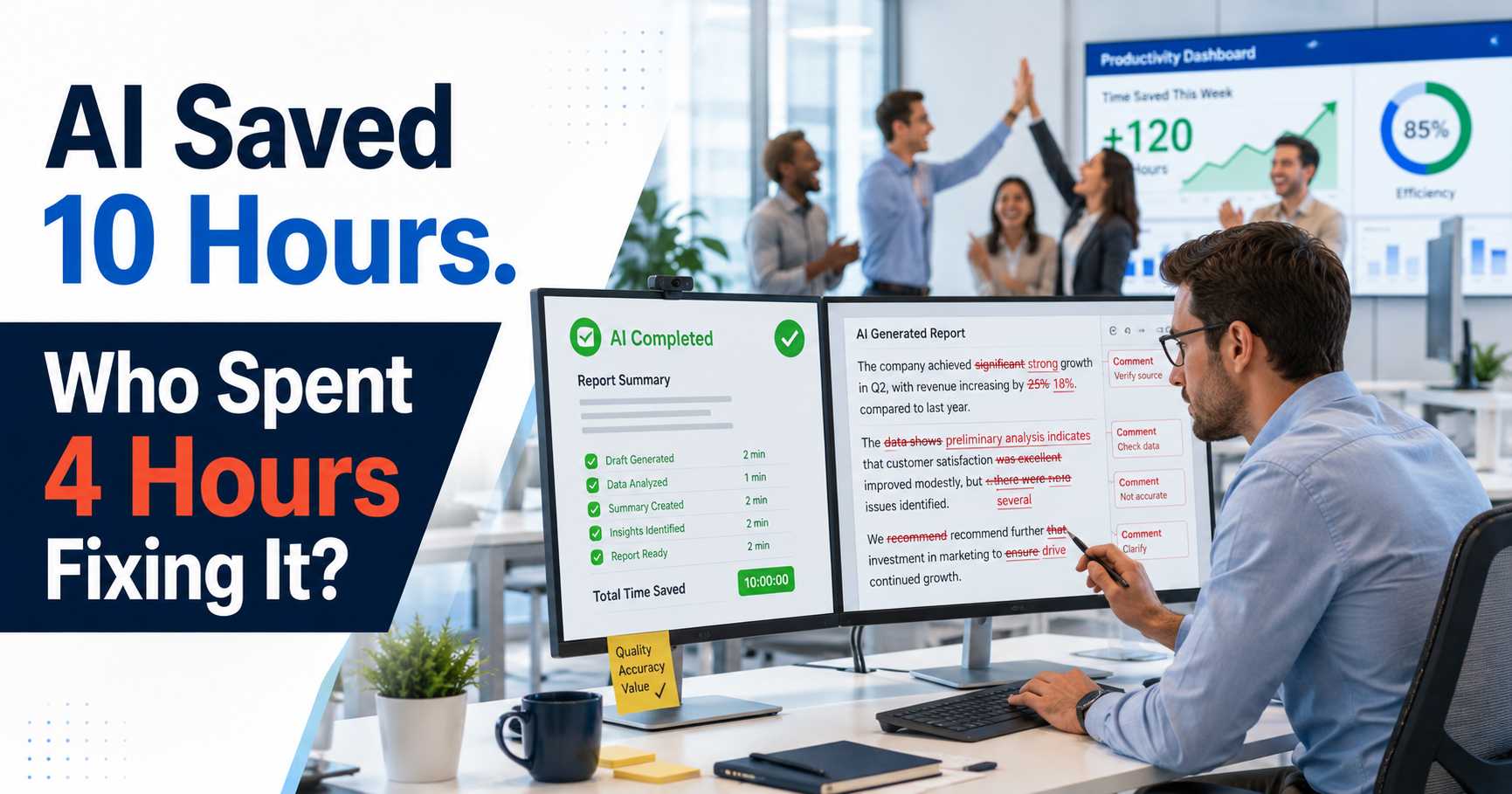
The corporate world is already remarkably good at confusing activity with progress. AI provides almost irresistible opportunities to do it again because so much usage can be counted. Active users, prompts submitted, documents generated, licences activated, sessions completed and hours supposedly saved can all be transformed into colourful executive dashboards.
A company can then proudly announce that 73% of its workforce is using AI and set a target of 85% for the following quarter. Business units receive adoption objectives, managers encourage reluctant employees to experiment and people eventually start opening the tool because somebody somewhere is measuring whether they do.
The adoption number rises. Whether the organisation has actually improved is another matter.
That is precisely the sort of behaviour Goodhart's Law predicts. Once AI usage becomes the target, employees will optimise for AI usage. The business may end up measuring how successfully it persuaded people to submit prompts rather than whether those prompts produced anything valuable.
I don't particularly care how frequently somebody uses AI. I care whether they can do their job well.
That gives organisations a much cleaner way to handle employees who object to AI. Don't mandate the prompt. Set legitimate expectations for the outcome.
If two employees performing comparable roles produce work of similar quality, at similar speed and similar cost, I see little reason to force one to use AI simply because the other does. One employee may use an approved assistant extensively for research, summarisation, drafting, analysis and automation. The other may choose not to use it at all. If both continue to meet the standards expected of the role, mandatory AI adoption becomes little more than technological conformity.
The situation changes when the performance difference becomes material.
If an approved AI capability allows one employee to perform a recurring task in two hours while another requires most of a day because they refuse to use it, the employer is entitled to care about that difference. The employee can still object to AI, but that objection does not necessarily create an obligation for the organisation to lower its expectations or preserve the economics of a deliberately less efficient way of working.
This is where I think much of the future argument about AI in the workplace will eventually settle. The employer does not necessarily need to mandate the tool. It can mandate a reasonable outcome.
You may choose not to use AI. You may still be expected to perform at the level AI has made possible.
That is a much more defensible position than demanding that everyone use Copilot because the company has bought 20,000 licences.
The employer has obligations too
None of this gives organisations permission to deploy AI carelessly and then blame employees for resisting it.
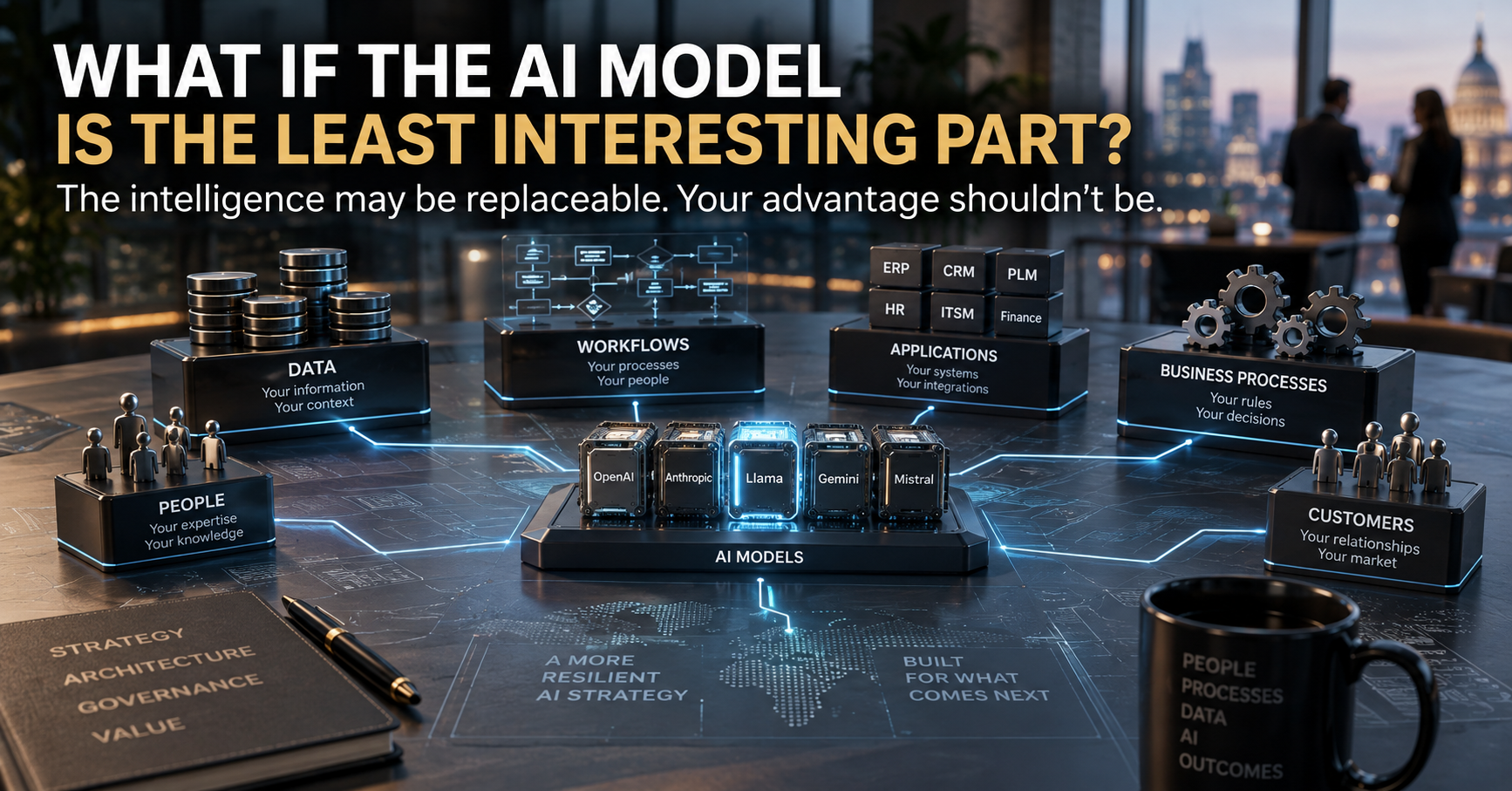
Before an employer can reasonably expect people to use AI, it needs to create an environment in which responsible use is actually possible. That means approved platforms, appropriate contractual protections, data classification, access controls, security monitoring, clear policies, training and an explicit understanding of who remains accountable for the output.
Employees need to know what information can be entered into an AI system and what cannot. They need to understand how confidential information, personal data, source code and intellectual property should be handled. They need to know which decisions require human review, where AI is inappropriate and what they are expected to do when a model produces something that appears plausible but is wrong.
An organisation encouraging employees to “use AI more” without answering those questions has little credibility when somebody refuses.
There is an enormous difference between an employee rejecting a properly governed enterprise AI platform because they object to AI in principle and an employee refusing to paste confidential corporate information into whichever public chatbot their manager discovered last weekend. The latter may be demonstrating considerably better judgement than the manager.
The same applies to the quality of the business case. AI should be used because it improves something, not because senior management has decided the organisation needs an AI story. There will be processes where AI adds little value, and there will be employees whose work does not materially improve because a generative model has been inserted into it. Forcing adoption in those circumstances simply creates theatre.
An employer therefore has to earn the right to expect AI adoption. It does that by providing appropriate technology, governing it properly and demonstrating that its use is genuinely relevant to the work.
Only then does the discussion about individual refusal become meaningful.
Respecting an objection does not mean accepting it
Leaders should also resist the temptation to classify every AI objection as ignorance that can be cured with another training course.
Some employees will understand the technology perfectly well and still dislike what it represents. They may believe automation threatens their profession or their colleagues. They may object to the energy and water consumed by large-scale computing infrastructure. They may have concerns about intellectual property and training data. They may distrust generative systems because they have seen them confidently produce false information. Some will simply believe that particular forms of human work should remain human.
Several of those concerns are legitimate.
AI does consume substantial resources. It will change jobs and may eliminate some roles. Models do produce incorrect information. Intellectual-property disputes remain unresolved. Poorly governed AI can expose sensitive information. Overreliance on generated content can weaken rather than strengthen professional judgement.
Leadership loses credibility when it pretends otherwise.
The right response is therefore neither ridicule nor automatic accommodation. It is to listen, distinguish legitimate operational concerns from philosophical objections and fix the things the organisation genuinely has wrong.
A sceptical employee can be enormously useful. They can expose weaknesses that an enthusiastic project team has missed. They can identify where the tool produces poor results, where governance is inadequate or where the claimed productivity improvement simply doesn't exist. Organisations pursuing AI aggressively need those voices because technology programmes become dangerous when everybody involved is rewarded for believing in them.
But listening does not require permanent agreement.
There comes a point at which leadership has to decide how the organisation will operate. A company can respect someone's ethical objection while concluding that it cannot redesign a role indefinitely around that objection.
That isn't intolerance. It is one of the unavoidable consequences of technological change.
AI competence matters more than AI usage
There is an irony in all of this. The employee enthusiastically using AI may ultimately pose a greater risk than the employee refusing it.
An employee who accepts AI-generated material without checking it, allows the technology to substitute for professional judgement or submits fabricated information because “the model generated it” is not demonstrating technological competence. They are demonstrating the opposite.
Using AI cannot transfer accountability to the model provider.
If an AI assistant generates an impressive-looking report containing invented facts and an employee submits it, the important failure isn't that the model hallucinated. Generative models are known to do that. The failure is that a human submitted work they had not adequately validated.
This is another reason organisations should avoid making AI usage itself a target. The non-user may produce excellent work while the enthusiastic adopter produces rubbish considerably faster. Only one of them has a performance problem.
The professional capability that matters is therefore not prompting. It is judgement.
Employees need to understand when AI is useful, when it isn't, what information should be trusted, what needs checking and when a human should override or ignore what the technology suggests. They need enough understanding of the system's limitations to recognise when its output deserves suspicion.
I suspect that capability will eventually cease to be described as “AI skills” at all.
We don't generally advertise senior office roles requiring email skills. Finance professionals are expected to understand spreadsheets. Knowledge workers are expected to know how to search for information online. Those technologies became absorbed into ordinary professional competence.
AI is likely to follow a similar path, particularly as it becomes embedded into applications rather than accessed through a separate chatbot. The obsession with prompt engineering may eventually look like an artefact of AI's early years. Most employees will simply encounter AI throughout the tools they already use.
At that point, refusing AI becomes considerably harder to define. An employee might avoid a chatbot, but what happens when AI summarises their meeting, prioritises information in an application, identifies anomalies in financial data, recommends a response to a customer or sits inside the ERP workflow they use every day?
The technology will increasingly disappear into the workplace.
The important competence will be knowing how to work responsibly in an environment where AI is present.
Productivity gains eventually become normal expectations
The uncomfortable reality for conscientious objectors is that genuine productivity improvements rarely remain optional bonuses forever.
When technology allows organisations to accomplish materially more with the same resources, work eventually reorganises around that capability. Spreadsheets changed what finance teams could reasonably be expected to calculate. Automation changed expectations in manufacturing and operations. Cloud platforms changed the speed at which infrastructure could be provisioned. Self-service analytics changed how quickly people could access information.
If AI produces sustained productivity improvements, it will eventually do the same.
That does not mean organisations should take whatever percentage a technology vendor claims and immediately demand equivalent additional output from employees. Work is more complicated than that. Productivity improvements may appear as higher quality rather than greater volume. AI may allow employees to spend more time with customers, investigate problems more deeply, reduce administrative work or make decisions faster. In many roles, the biggest benefit may be removing repetitive work rather than producing more units of output.
Leaders need to understand where the value genuinely appears before changing expectations.
But once a new capability becomes part of normal operations, expectations inevitably evolve. Someone choosing not to use that capability may eventually find themselves in the same position as someone insisting on performing manually a process that everyone else has automated.
Their choice may remain sincere.
It may even be principled.
But sincerity does not eliminate the economic consequences of the choice.
This is why I would resist creating a special category of “AI conscientious objector” with an assumed right to permanent exemption. Organisations should accommodate legitimate legal, accessibility and employment requirements, and managers should take genuine concerns seriously. Beyond that, the question should remain whether the employee can continue to perform the role to the standard reasonably expected of it.
If they can, leave them alone.
If they cannot, address the performance issue.
The fact that AI sits somewhere in the causal chain should not fundamentally change that.
The Pragmatic View
Companies should not force employees to use AI simply to demonstrate that an AI programme is succeeding.
That produces adoption theatre, encourages meaningless usage and risks turning prompts into another executive KPI that everybody learns to game.
Nor should employees receive an automatic exemption from technological change because they object to AI.
The bargain should be more straightforward.
Employers have to provide secure, governed and appropriate technology. They have to train people, protect data, acknowledge limitations and remain honest about where AI adds value and where it does not. They should listen seriously to sceptics because those people may identify risks that enthusiastic adopters overlook.
Employees, in return, remain responsible for meeting the legitimate expectations of their roles.
If somebody can produce excellent work without AI, I don't care how many prompts they submit. Zero may be perfectly acceptable.
If somebody uses AI constantly but produces unreliable or mediocre work, their adoption statistics are irrelevant.
And if somebody refuses AI and consequently cannot meet reasonable standards that colleagues using approved tools can achieve, the organisation should stop treating the issue as an AI debate.
It has become a performance issue.
This distinction will matter more as AI becomes embedded into the applications people already use. Eventually, being an “AI user” may sound as peculiar as describing somebody today as an “email user”. The technology will simply be part of the working environment.
People should continue questioning it. They should challenge irresponsible deployment, poor governance and exaggerated productivity claims. Organisations need that scepticism.
But professional autonomy has never meant that every employee gets to choose which technological changes apply to their job.
You don't have to like AI.
You don't necessarily have to use it either.
But you still have to be able to do the job.