
What If the AI Model Is the Least Interesting Part?
For the last few years, enterprises have spent an extraordinary amount of time asking which AI model they should choose.
OpenAI or Anthropic?
Google or Microsoft?
Open source or proprietary?
One strategic provider or several?
Those are reasonable questions. I have been involved in enough technology strategy discussions to know why organisations ask them. Vendor selection feels consequential because historically it often was. Pick the wrong ERP platform and you could spend a decade regretting it. Choose the wrong infrastructure architecture and extracting yourself later could cost millions.
But I increasingly wonder whether we are carrying that thinking into AI when the economics of the technology may be moving in a very different direction.
I recently came across a set of observations from Anish Acharya at a16z on where AI is heading. Several caught my attention, but one in particular stayed with me:
“Value is in the packaging, not the intelligence.”
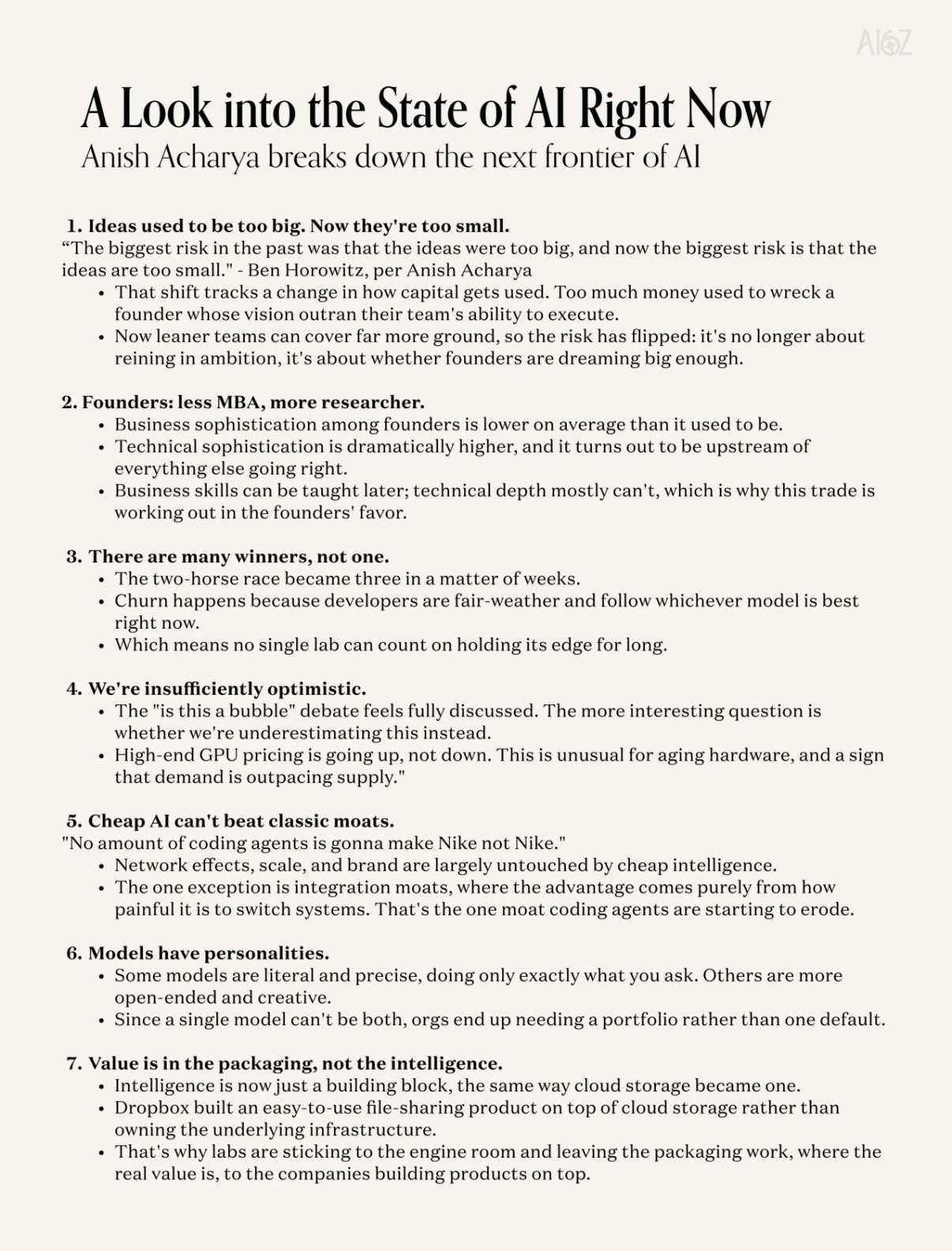
Acharya's comparison was with cloud storage. Dropbox did not need to own the underlying storage infrastructure to create something valuable. Storage became a building block. The value came from turning that capability into a product people actually wanted to use.
It raises an interesting question for enterprise AI.
What happens if intelligence becomes a building block too?
We may be arguing about the wrong layer
Think about how quickly the model landscape has already changed.
The model regarded as the obvious leader today may not be the obvious leader six months from now. Different models already perform better at different tasks. Pricing changes. Context windows expand. Reasoning improves. New capabilities arrive. Open models close gaps that previously looked enormous.
Developers have very little loyalty to any of them.
Give them something materially faster, cheaper or better and workloads can move remarkably quickly, assuming the surrounding architecture allows it.
Yet many enterprise AI strategies still begin with something resembling:
Which model are we going to standardise on?
Perhaps the better question is:
Why are we designing the business around the model at all?
If the underlying intelligence continues becoming cheaper, more capable and increasingly interchangeable, then selecting one model may eventually look rather like selecting a particular storage technology.
Important operationally.
Potentially important commercially.
But not where the business creates its differentiation.
Your competitor can probably buy the same intelligence
Suppose your organisation has access to one of the world's best AI models.
So does your competitor.
You deploy the latest coding assistant.
They can buy it too.
You give employees access to advanced reasoning models.
Nothing prevents another company from doing exactly the same thing next week.
Access to AI is therefore unlikely to remain much of a competitive advantage.
That doesn't mean AI cannot create competitive advantage. It means the advantage has to come from somewhere else.
What information can your AI access?
What processes have you redesigned around it?
What decisions can it make?
What systems can it interact with?
How deeply is it integrated into the way the company actually operates?
And perhaps most importantly:
What does your organisation know that everybody else's model does not?
That is where things become much more interesting.
The model doesn't know your business
A frontier model may know an extraordinary amount about the world.
It does not inherently know why a particular customer has complained six times in eighteen months.
It doesn't know that one supplier repeatedly misses delivery dates whenever demand exceeds a certain threshold.
It doesn't understand the undocumented workaround your finance organisation has used for seven years because two systems never integrated properly.
It doesn't know why an experienced service engineer can hear a machine running and recognise that something isn't quite right.
Businesses contain enormous amounts of this knowledge.
Some of it lives in databases.
Some lives in documents.
Some lives in ERP, CRM, PLM, ServiceNow, email and Teams.
And an uncomfortable amount still lives inside people's heads.
Giving employees access to a better model does not magically connect any of this.
That is why I think the enterprise AI discussion is gradually going to move away from model capability and towards organisational context.
The model provides intelligence.
The enterprise provides meaning.
This changes where CIOs should concentrate
If that argument holds, then an AI strategy built primarily around selecting a strategic model provider may be solving the wrong problem.
The architecture becomes more important than the model.
Can models be changed without rebuilding the application?
Can different workloads use different models?
Can sensitive data remain within appropriate boundaries?
Can the organisation determine which information an agent can access?
Can it control what actions that agent is allowed to take?
Can it observe what happened afterwards?
And can all of that survive when the model underneath changes?
That last question matters enormously.
We spent decades learning the cost of vendor lock-in. It would be slightly absurd to repeat the lesson at machine speed.
There may be perfectly legitimate reasons to standardise around a provider. Commercial leverage matters. Skills matter. Integration matters. Security and governance certainly matter.
But standardisation should not quietly become dependency.
Particularly when the market itself is telling us that today's leader may not remain tomorrow's leader.
Perhaps the future is deliberately multi-model
There is another observation in Acharya's discussion that I found interesting: models have personalities.
I wouldn't take the word too literally, but anyone who uses several models regularly will recognise the point.
One can be exceptionally precise.
Another may be better at exploratory reasoning.
One may excel at coding.
Another may offer the economics required for millions of relatively simple transactions.
Why would an enterprise expect one model to be optimal for every workload?
We don't run every application on the same database simply because databases all store information.
We don't choose one programming language for an entire company.
We don't insist that every workload requires the most expensive compute available.
Yet there remains an instinct to find the enterprise's approved AI model and put everything through it.
Perhaps that will prove to be a transitional architecture.
The more mature model could instead be a portfolio: workloads routed towards the intelligence appropriate to the task, constrained by cost, performance, security, sovereignty and risk.
The employee may never know which model answered.
Nor should they necessarily care.
Sovereignty makes this more than an economics question
There is another reason I am reluctant to build enterprise AI strategy around one provider.
Sovereignty.
AI is increasingly becoming part of the operating fabric of companies. Once models can read corporate information, influence decisions and act across systems, where that processing occurs and under whose jurisdiction stops being an abstract infrastructure question.
European organisations in particular are already confronting this.
Where is the model hosted?
Where does the data go?
What happens if geopolitical or regulatory conditions change?
Can a workload move between regions?
Could the service fail over somewhere the organisation did not intend?
Can the company substitute another model if a provider, jurisdiction or regulatory environment becomes unacceptable?
Those questions become much easier to answer when the enterprise owns the AI architecture rather than allowing the AI provider to become the architecture.
That distinction may prove extremely important.
Cheap intelligence does not eliminate traditional moats
There is another side to this argument which I think gets overlooked amid predictions that AI will destroy every established business model.
Acharya makes a wonderfully simple observation:
“No amount of coding agents is gonna make Nike not Nike.”
Exactly.
AI can make software cheaper to create.
It can reduce the cost of producing content.
It can automate processes that previously required people.
But it doesn't instantly recreate decades of brand recognition, distribution, manufacturing capability, customer relationships, physical infrastructure or network effects.
This matters because we've occasionally confused the ability to build something with the ability to build a business around it.
AI dramatically lowers the first barrier.
It doesn't necessarily remove the second.
If your company's competitive advantage exists primarily because its software is difficult to reproduce, AI should probably worry you.
If your advantage comes from brand, scale, proprietary data, customer relationships, operational capability or a deeply embedded ecosystem, the picture is rather different.
AI may actually strengthen those advantages if you can combine them with cheap intelligence faster than somebody else can recreate the underlying business.
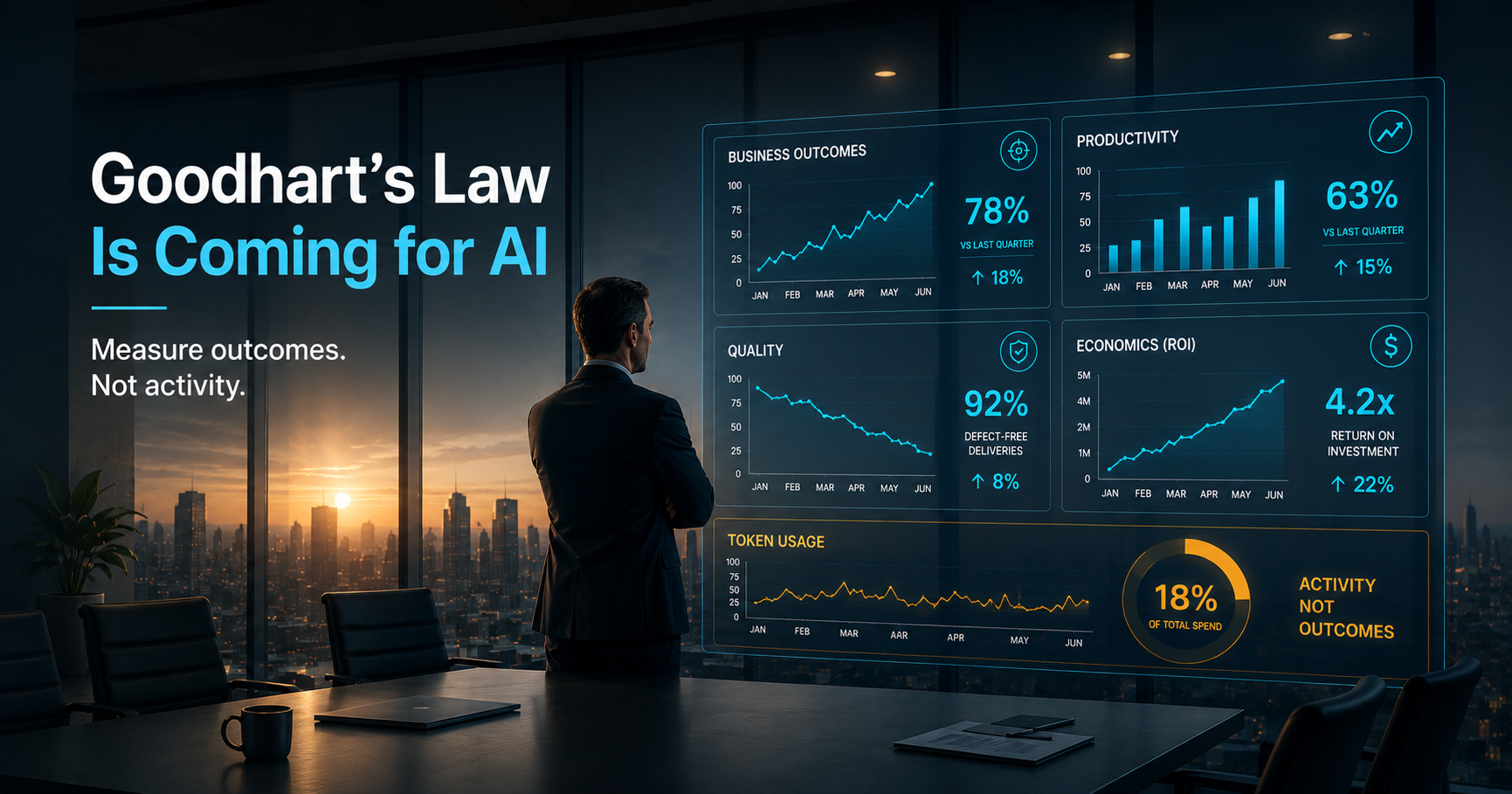
The moat may be everything around the model
This brings us back to the original observation.
If intelligence becomes infrastructure, where does enterprise value move?
I think towards everything surrounding it.
Your data.
Your workflows.
Your integrations.
Your business rules.
Your customer relationships.
Your accumulated organisational knowledge.
Your ability to govern automated decisions.
Your ability to turn an impressive demonstration into something thousands of people actually use every day.
None of those things are particularly glamorous compared with announcing that the company has adopted the latest frontier model.
But they are much harder for a competitor to copy.
And that is usually where sustainable advantage comes from.
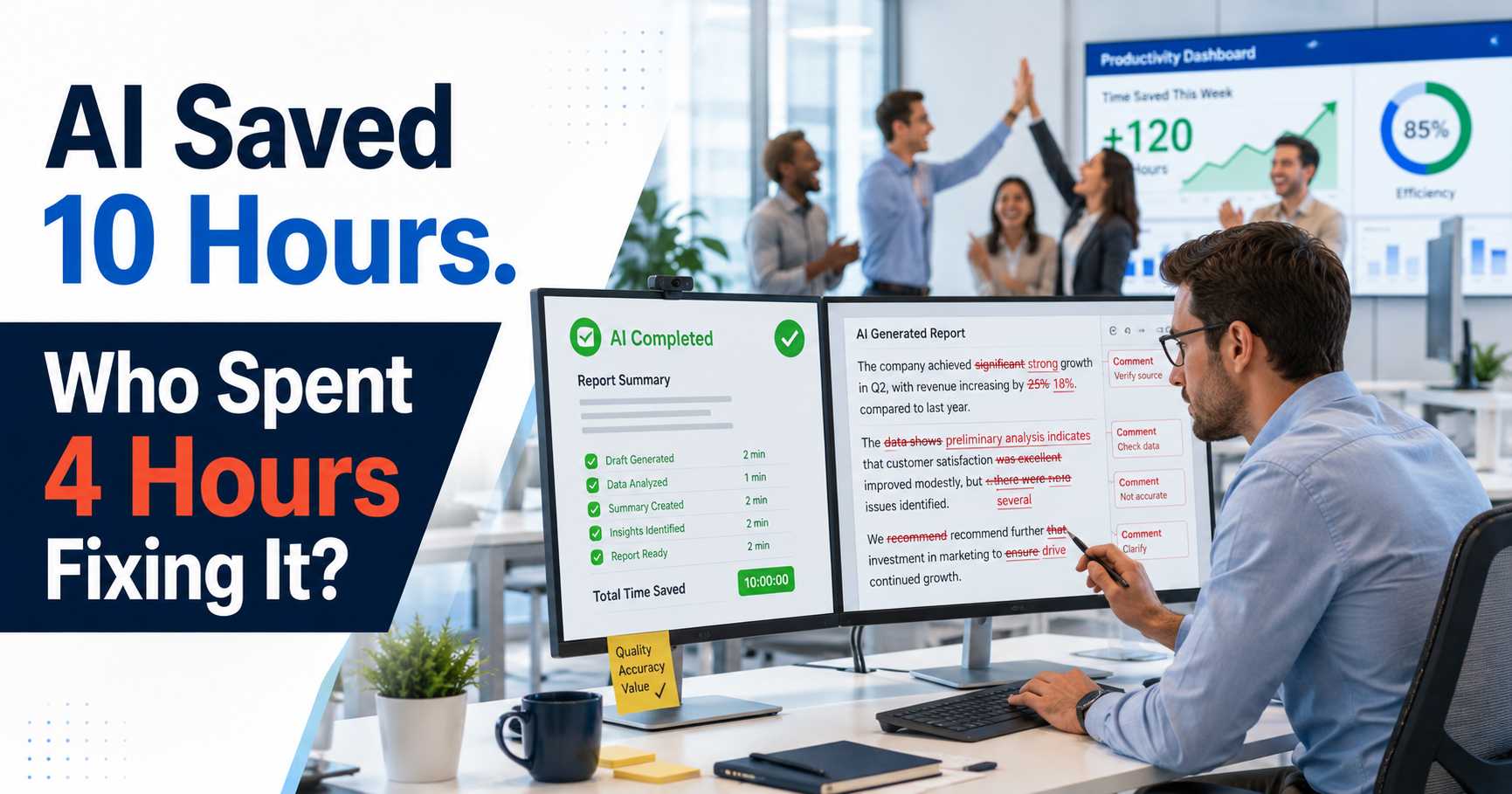
Don't confuse access with transformation
There is a trap here for boards as well.
Buying AI is easy.
Transforming a company with it isn't.
An organisation can licence Copilot, ChatGPT, Gemini, Claude or whatever comes next and truthfully tell its board that thousands of employees now have access to generative AI.
That is adoption.
It isn't necessarily transformation.
Transformation happens when the underlying work changes.
A process that previously took three days takes twenty minutes.
A service engineer can diagnose a problem using knowledge accumulated across thousands of previous repairs.
A procurement organisation identifies supplier risk before a human analyst would have noticed the pattern.
A customer gets an answer because an AI system can securely traverse five internal systems that previously required four departments and six emails.
The model matters in all of those examples.
But it isn't the valuable part.
The valuable part is what the organisation built around it.
The question I would ask now
If I were reviewing an enterprise AI strategy today, I would still want to know which models the company intends to use.
But that would no longer be my first question.
I would ask:
What are we building that remains valuable if we replace the model underneath it tomorrow?
If the answer is “not much”, then perhaps we haven't built an AI strategy.
We've selected a vendor.
And those are two very different things.
The Pragmatic View
The AI industry is still moving far too quickly to declare models irrelevant. They aren't. Capability, cost, security, performance and reliability still matter enormously.
But I suspect the strategic importance of the model itself will decline as intelligence becomes more abundant.
For CIOs, that changes the investment question.
Don't spend all your energy trying to predict which model wins.
Build an architecture that allows you to benefit from whichever one does.
Connect it to the data your competitors don't have. Put it inside processes they cannot easily reproduce. Protect the sovereignty and governance boundaries the business requires. And make sure you can replace the intelligence underneath without dismantling everything sitting above it.
Anish Acharya's observation is deceptively simple:
“Value is in the packaging, not the intelligence.”
For enterprise technology, I would take it one step further.
The model may provide the intelligence. The competitive advantage comes from what only your business can put around it.